Fire Extinguisher and Alarm System in Qatar: How They Work Together
How Fire Alarms and Extinguishers Work Together
A fire alarm tells people to get out. A fire extinguisher gives trained people a chance to stop a small fire before it spreads. Used together, they form the first line of defence in almost any building. This guide explains how a fire extinguisher alarm system in Qatar works as a combined approach, and what you need to get right.
The Alarm: Warning First
A fire alarm detects a fire and alerts everyone in the building. It also shows where the fire is, so people can leave safely and responders know where to go.
Key parts of a fire alarm system include:
- Detectors that identify signs of fire
- Manual call points that let people raise the alarm
- Sounders that warn occupants
- A control panel that indicates and manages system status
Raise the Alarm and Evacuate
The alarm's first job is to warn people and support a safe evacuation. Do not delay raising the alarm to try to fight a fire.
The Extinguisher: Small Fires Only
Extinguishers are for fires in their earliest stage. They are not for large or fast-spreading fires. The first rule is always to raise the alarm and make sure you have a clear escape route. Only trained people should attempt to use an extinguisher, and only when it is safe to do so.

Water
Suitable for fires involving ordinary combustible materials such as paper, wood and textiles.

Foam
Used for flammable-liquid fires and some general-use applications, depending on the extinguisher rating.

CO2
Often selected for electrical equipment and office environments.

Dry Powder
A versatile option for a range of liquid, gas and electrical risks. Confirm suitability for the specific area and equipment.

Wet Chemical
Designed for cooking oil and fat fires, making it an important consideration for kitchens.
Always check the extinguisher's label and follow the equipment instructions. The correct type depends on the hazards in the area.
Getting the Combination Right
A fire extinguisher alarm system in Qatar works best when both parts are planned together. Consider these practical steps:

Position Equipment Well
Place extinguishers near exits and call points, where people naturally pass. Make sure signs are visible and escape routes are never blocked.

Train Staff
Train staff so they know when it may be safe to use an extinguisher and when they must leave and follow the evacuation procedure.

Match Equipment to Risk
Check that extinguisher types match the risks in each area, including kitchens, offices, workshops and storage spaces.

Keep Routes Clear
Keep access to alarm call points and extinguishers clear so they can be reached promptly, and make sure people can get to an exit safely.
Inspection and Maintenance
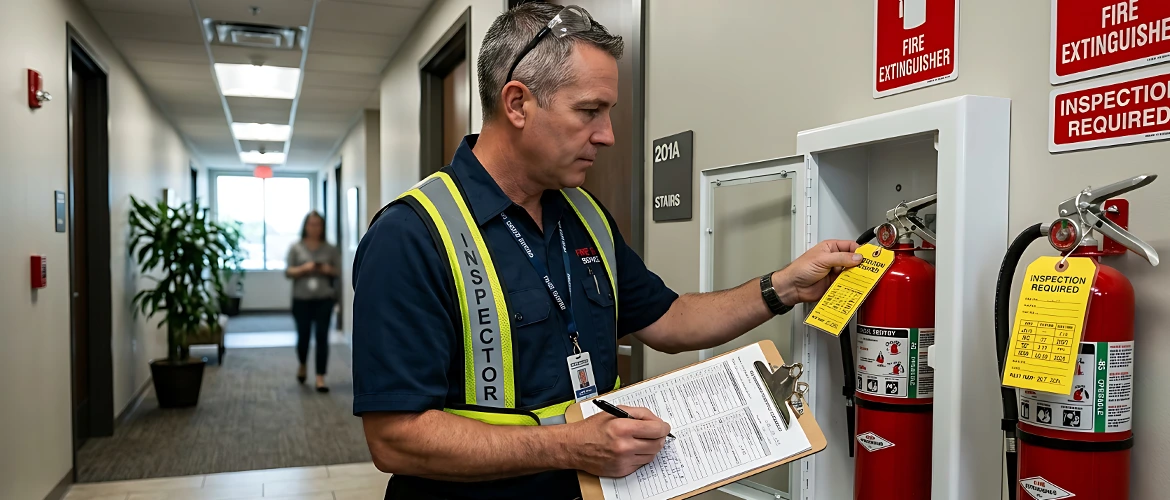
Extinguishers must be checked regularly for pressure, damage and expiry, and serviced and refilled on schedule. Alarm systems should be tested routinely, with records kept.
A neglected extinguisher or a faulty alarm gives a false sense of safety. Include both systems in a planned maintenance routine and address faults promptly.
- Check extinguishers for pressure, visible damage and expiry.
- Arrange servicing and refilling on schedule.
- Test alarm systems routinely and keep clear records.
One Planned Safety Routine
Keep inspection and test records for both alarms and extinguishers. A coordinated maintenance schedule helps ensure the warning and first-response equipment are ready when needed.
Final Thoughts
An alarm and an extinguisher do different jobs, and you need both. A properly planned fire extinguisher alarm system in Qatar protects people first and property second.
Unsure What Your Premises Need?
RGI Fire can help you choose and maintain the right equipment. Contact us to set up a fire extinguisher alarm system in Qatar that suits your building and keeps you prepared.