Fire Safety on Active Construction Sites in Qatar
What Contractors Must Get Right: Hot Work, Temporary Protection & QCDD Compliance
Introduction
Qatar's construction sector rarely slows down. Mixed use towers, mega projects tied to Qatar National Vision 2030, and continued expansion around Doha, Al Rayyan, and Al Wakrah mean cranes and scaffolding are a permanent part of the skyline. But an active construction site is one of the highest fire risk environments a project will ever pass through more dangerous, in many ways, than the finished building it becomes.
Temporary electrics, stored fuel, hot work, combustible materials, and a fire protection system that is not fully installed yet all combine on the same site, often at the same time.
This guide covers what fire safety on a Qatar construction site actually requires beyond the finished building's fire alarm and sprinkler design and where contractors most often fall short.
Why Construction Sites Carry Higher Fire Risk
A completed, occupied building in Qatar operates under a QCDD fire safety certificate, with permanent detection, suppression, and trained facilities staff in place. A construction site has none of that maturity yet.
Evolving Site Layout
Emergency access routes that worked last month may be blocked by material stockpiles or equipment today.
Routine Hot Work
Welding, cutting, grinding, and torch applied roofing happen daily, and each activity is a potential ignition source.
Combustible Materials
Timber formwork, insulation, packaging, and temporary site cabins create a substantial and changing fuel load.
Changing Personnel
Subcontractor crews rotate in and out, so fire awareness training cannot be treated as a one-time briefing.
Incomplete Protection
Sprinklers, fire pumps, and alarm panels are often only partially commissioned until late in the build.
What Qatar's Regulatory Framework Requires
Fire safety on Qatar construction sites sits within a layered regulatory framework, not a single checklist.
| Framework | What It Covers |
|---|---|
| Law No. 9 of 1993 | Establishes the Qatar Civil Defence Department's authority to inspect buildings and sites and enforce compliance. |
| Qatar Construction Specifications (QCS) | Sets fire protection and life safety requirements referenced during design and construction. |
| NFPA-based technical standards | QCDD fire safety plan submissions must reference applicable standards such as NFPA 10, 13, 14, 20, 22, 24, 101, 170, and 5000. |
| Ministry of Municipality permits | Govern site access, entrances, and exits so Civil Defence vehicles are never obstructed. |
QCDD has progressively strengthened enforcement, particularly following serious fires in Qatar's labour accommodation and commercial sectors. Temporary and semi-permanent structures on and around construction sites carry real risk, not just the permanent building itself.
Hot Work Permit Controls
Any work involving open flames, sparks, or heat including welding, cutting, grinding, brazing, and torch applied roofing should require a signed hot work permit before it begins. A proper permit process confirms:
- The area has been cleared of combustible material within a safe radius.
- A fire extinguisher and, where appropriate, a fire watch are in place during the work and after it ends.
- Ignition sources are isolated from stored fuels, gas cylinders, and flammable liquids.
Temporary Fire Protection Until the Permanent System Is Live
Between groundbreaking and system commissioning, the site needs effective interim protection.
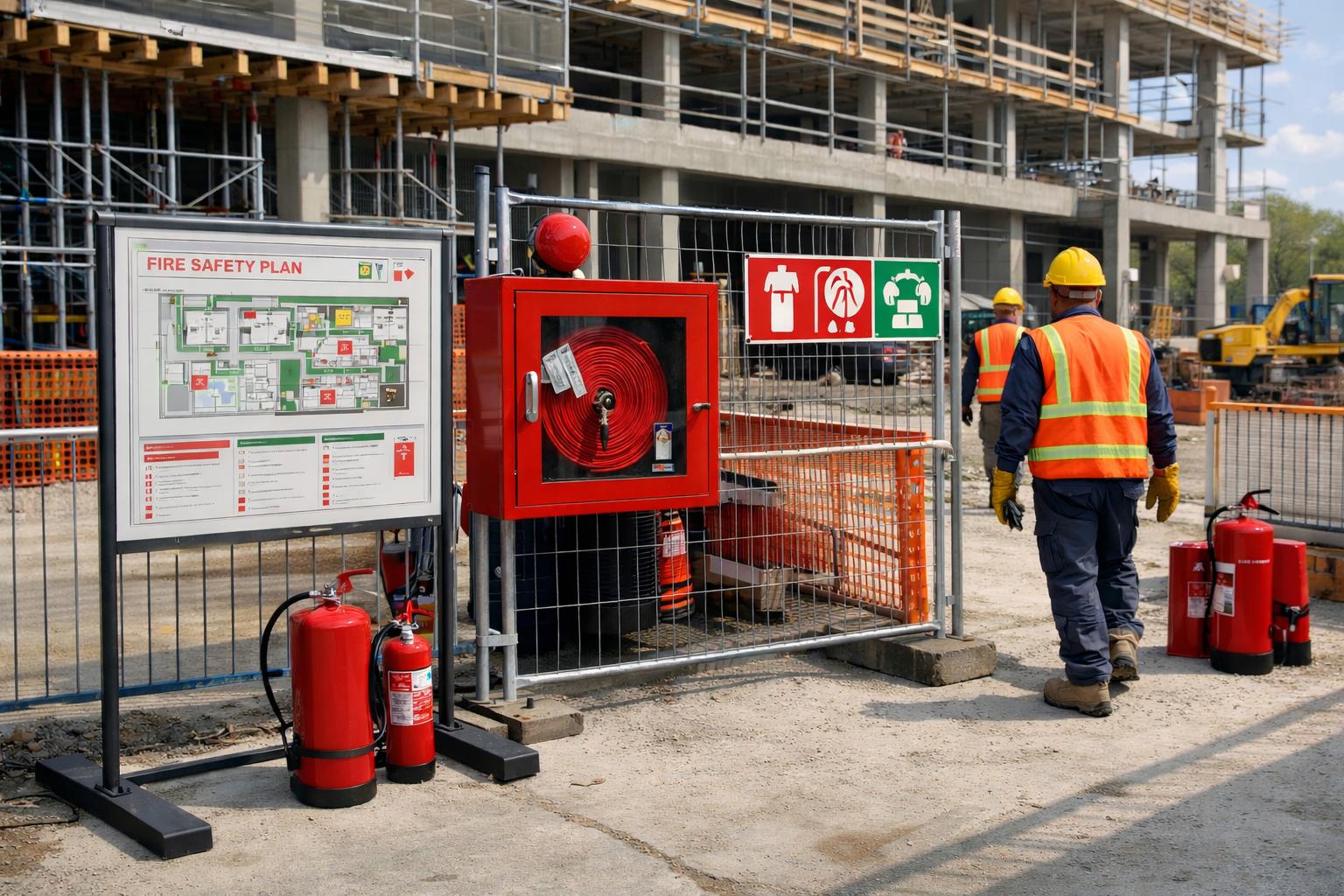
- Position portable fire extinguishers at logical intervals across active work zones, not only at entrances.
- Provide temporary standpipes or a suitable water supply where the permanent fire pump and riser system is not yet operational.
- Maintain clear, unobstructed emergency access routes as the site layout evolves. This is a specific QCDD requirement, not simply good practice.
Site Storage & Housekeeping
Segregate Materials
Keep fuels, solvents, gas cylinders, and other flammable materials away from work areas and site accommodation.
Remove Waste
Clear waste and packaging on a routine schedule instead of allowing combustible material to accumulate.
Secure Cylinders
Store LPG and fuel cylinders upright, secured, away from ignition sources, and with clear signage.
Fire Safety Plan Documentation
QCDD fire safety plan submissions must be prepared and endorsed by a designated consultant engineer, reference applicable NFPA standards, and list QCDD-approved firefighting equipment and devices. For an active site, the plan should also identify:
- Assembly points and evacuation routes for the current construction phase.
- Procedures for alerting every crew and subcontractor on site.
- Coordination points with Qatar Civil Defence for site access.
Ongoing Site Fire Safety Training
Because construction crews rotate constantly, fire awareness cannot rely on a single induction session. Recurring toolbox talks covering hot work procedures, extinguisher use, evacuation routes, and emergency contacts keep awareness current as new subcontractors join the site.
Ask Your Fire Safety Contractor
Who is responsible for updating our fire safety plan and temporary protection measures as the site layout and phase change? A plan drawn up at mobilisation and never revisited does not reflect the site six months later.
Common Construction Site Fire Safety Mistakes
- Treating fire safety as a finished-building concern and deferring proper protection until systems are commissioned late in the project.
- Issuing hot work permits as a formality without a genuine fire watch or post work check.
- Allowing combustible waste to accumulate between scheduled housekeeping rounds.
- Blocking emergency vehicle access with stockpiles, site cabins, or parked plant equipment.
- Failing to update the fire safety plan as the site moves through construction phases.
- Assuming rotating subcontractor crews already know the site's fire procedures.
How RGIFIRE Supports Construction Sites Through to Handover
RGIFIRE works with contractors across Qatar from early mobilisation through to final QCDD certification not just at the point of final system commissioning. That includes advising on temporary fire protection measures, hot work safety controls, and interim extinguisher coverage while permanent systems are being installed, alongside the design, supply, and installation of the fire alarm, suppression, and fire pump systems the finished building will rely on.
Because our team manages QCDD submittals and inspections in house, contractors get a single point of accountability from groundbreaking to final certificate rather than juggling separate consultants for the construction phase and the completed building.
Is Your Active Site Ready for Its Next Inspection?
If your site does not yet have a documented fire safety plan, or its temporary protection measures have not been reviewed against current QCDD requirements, RGIFIRE can assess the site and recommend what is needed.
Contact RGIFIRE