Fire Evacuation Plan and Fire Drills in Qatar: A Step-by-Step Guide for Workplaces
A Practical Fire Evacuation Guide for Qatar Workplaces
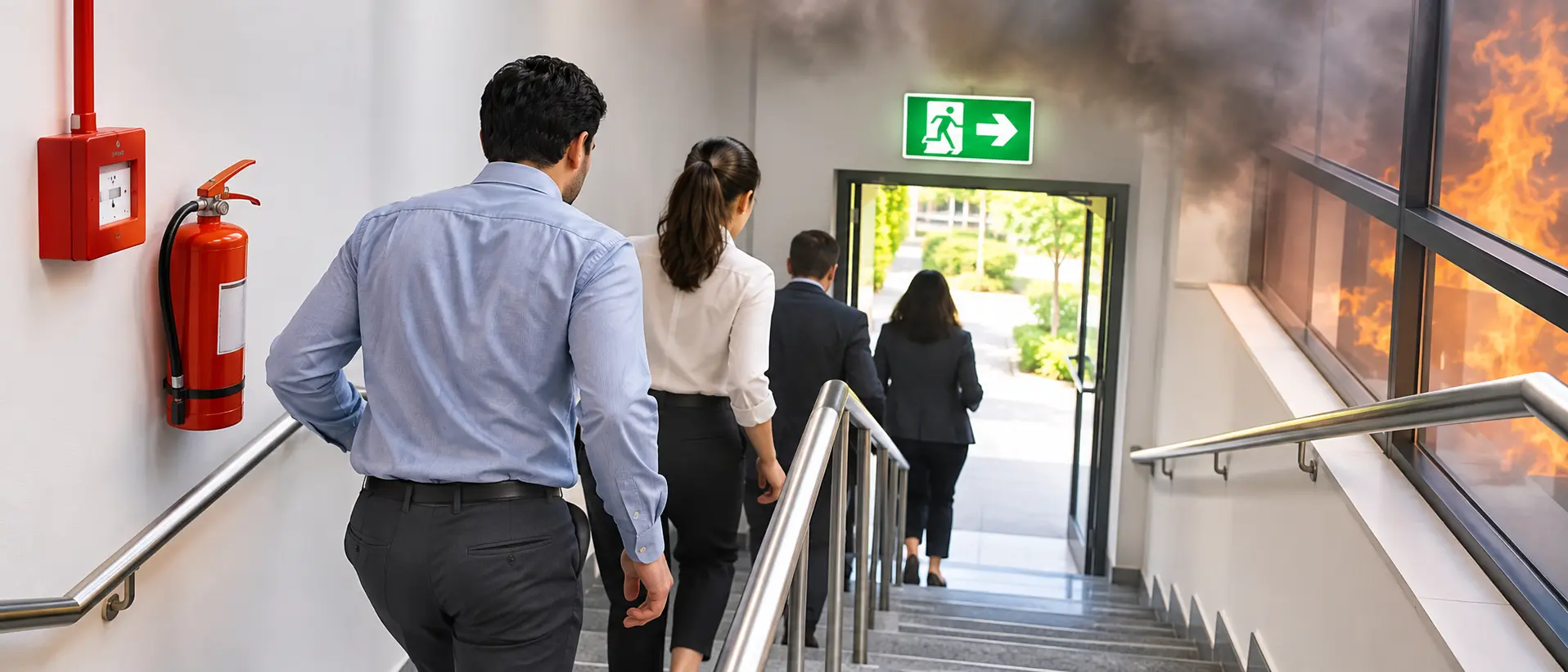
When the alarm sounds, people have seconds to make decisions. Without a clear plan, even a well-protected building can turn chaotic. A written evacuation plan, backed by regular drills, makes sure everyone knows where to go and what to do.
This guide from RGI Fire, a fire safety company in Qatar, explains how to build an effective workplace evacuation plan, assign responsibilities, run a fire drill and use the results to improve safety.
Why Every Workplace Needs an Evacuation Plan
Alarms, detectors and extinguishers protect a building, but people still have to get out. An evacuation plan turns fire safety equipment into a safe, orderly exit. It reduces panic, helps prevent injuries and gives emergency services clearer information when they arrive. RGI Fire sees evacuation planning as the part of fire safety that ties everything else together.
Clear Escape Routes
Give every occupant a simple, well-marked route to a safe assembly point.
Coordinated Response
Make responsibilities clear so wardens, managers and staff act together.
Reliable Accountability
Confirm who has left safely and report anyone missing without delay.
What Your Fire Evacuation Plan Should Include
The plan should be specific to the building, its occupants and the hazards present. Keep it easy to understand and readily available. RGI Fire can help review your layout and check that the exits and escape routes suit your building.
Floor Plans
Mark exits, escape routes, stairwells and designated assembly points.
Clear Instructions
Explain exactly what occupants must do when the fire alarm sounds.
Named Responsibilities
Set out the duties of fire wardens, managers and other key staff.
Assisted Evacuation
Plan support for visitors, contractors and anyone with limited mobility.
Emergency Contacts
List key staff and emergency service details. In Qatar, call 999 in an emergency.
Assembly-Point Count
Use an agreed method to account for everyone after evacuation.
Roles to Assign Before an Emergency
- Chief fire warden: oversees the plan and liaises with emergency services.
- Floor wardens: check their areas, guide people out and report anyone missing.
- Evacuation assistants: support people who need help so no one is left behind.
- Emergency-service liaison: meets responders and passes on essential information.
Everyone else needs to know their role too: leave calmly, follow the designated route and report to the assembly point. RGI Fire can help train the people you appoint.
Make Every Role Practical
Choose people who know the premises, understand the procedure and can remain calm. Name deputies so each role is covered during leave, shift changes and absences.
How to Run a Fire Drill: Step by Step
A drill tests the plan, the equipment and the way people respond. Use these six steps to keep it controlled and useful.
Plan the drill
Decide the scope, timing and what you want to learn.
Brief the people involved
Wardens and managers should know what to expect and what to observe.
Sound the alarm
Activate the alarm in the agreed way and start the clock.
Evacuate
Follow the planned escape routes and move directly to the assembly point.
Count everyone
Complete the roll call and record delays, confusion or other problems.
Give the all-clear
Allow re-entry only when the person in charge confirms it is safe.
Test the complete response: RGI Fire can help check that the alarm system behaves as expected during a drill, so faults are found before a real emergency.
After the Drill: Review and Improve
Hold a short debrief while events are fresh. Record the results, assign actions, fix the problems and update the plan. RGI Fire can help turn your findings into a practical action list.
Questions to ask
- How long did the evacuation take?
- Were any exits blocked, locked or hard to find?
- Did everyone hear the alarm?
- Was anyone confused about where to go?
- Did the alarm and emergency lighting work properly?
Common Evacuation Mistakes to Avoid
- Keeping a plan on paper but never practising it.
- Allowing exits to become blocked or locked and corridors to become cluttered.
- Forgetting visitors, contractors and night-shift staff.
- Using lifts during an evacuation.
- Failing to update the plan after renovations or layout changes.
- Going back inside before the official all-clear.
RGI Fire can help you identify these issues before they put people at risk.
Never Treat a Drill as a Formality
A realistic drill exposes blocked routes, weak procedures, training gaps and equipment faults while there is still time to correct them.
When to Call a Fire Safety Company in Qatar
You do not have to develop the plan alone. A fire safety company in Qatar can inspect the building, confirm that escape routes, alarms and emergency lighting work together, and help you plan and test the evacuation procedure. Professional support is especially valuable for large buildings, shared premises and sites with higher-risk areas such as kitchens, storage spaces or plant rooms.
Final thought: An evacuation plan is only as good as the people who know it. Write it down, share it, practise it and keep it up to date. RGI Fire can help make sure the equipment, layout and people work together when it matters.