Fire Alarm System in Qatar
Fire Alarm System in Qatar: What Most Building Owners Get Wrong
Introduction
You installed a fire alarm system. You got your QCDD certificate. You moved on. But here is a question most building owners in Qatar never ask: is your fire alarm system actually doing its job right now, today?
This blog is not about the basics of fire alarm systems. It is about the gaps property owners and facility managers often discover only when something goes wrong: a false alarm that costs thousands, a QCDD renewal that fails, or a fire that spreads because a detector has been in fault mode for weeks.
The False Alarm Problem in Qatar
False alarms are one of the most under-discussed issues in fire safety in Qatar. When a fire alarm activates without a real fire, the Qatar Civil Defence Department dispatches emergency response teams. Repeated false alarms can result in formal warnings, fines, and, in serious cases, forced operational shutdowns pending a full system review.
Beyond regulatory penalties, the operational cost is significant. Evacuations disrupt business operations, emergency callouts consume critical resources, and insurance providers increasingly review false alarm histories when underwriting.
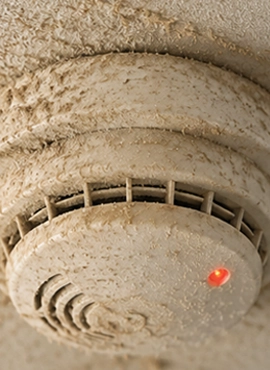
Dust Accumulation
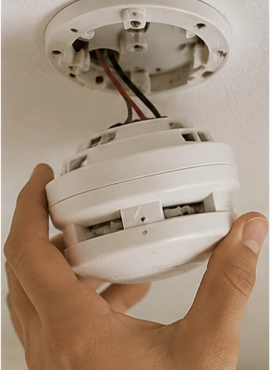
Wrong Detector Placement
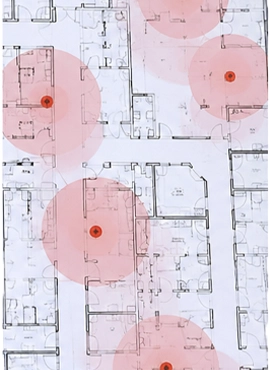
Improper Zone Mapping
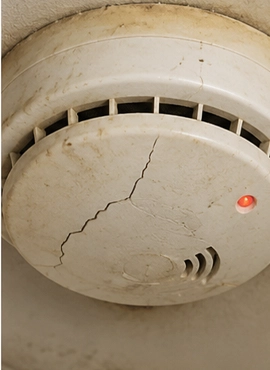
Aged Detectors
RGI Fire difference: Our AMC contracts include detector sensitivity testing, not just visual inspection, to identify detectors drifting toward false alarm thresholds before they cause an incident.
Conventional Systems
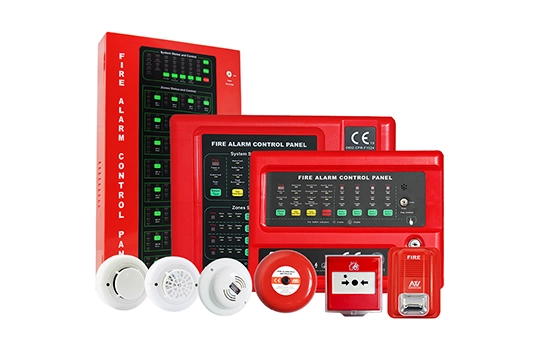
In a conventional system, each detection zone is wired to a specific circuit. When an alarm triggers, you know the zone, but not the individual device. For smaller buildings under 500 sqm with single occupancy, this can be adequate. At QCDD renewal, however, fault isolation can be time-consuming. If an inspector identifies a fault and your panel cannot pinpoint the exact detector, the inspection may fail and rescheduling can delay renewal by weeks.
Addressable Systems
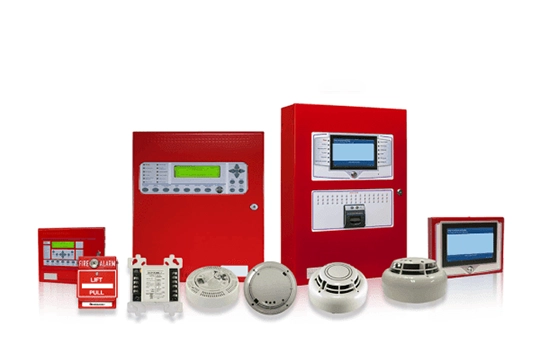
Every detector, call point, and module has a unique address. QCDD inspectors can verify system health at the panel in minutes, and any fault can be resolved with precision instead of floor-by-floor troubleshooting. For buildings above three floors, multi-tenant occupancy, or spaces exceeding 500 sqm, RGI Fire recommends addressable systems as the practical choice in Qatar's current compliance environment.
Is Your Fire Alarm System Ready?
RGI Fire offers a no-obligation Fire Alarm System Health Check to identify compliance gaps, performance issues, and upgrade opportunities before they become problems.
Contact RGIFIRESmart Fire Alarm Integration for Qatar High-Rises
Modern addressable fire alarm panels can be integrated directly into a building management system. This allows HVAC systems to shut down automatically to prevent smoke from spreading through ductwork, elevators to recall to ground floor upon alarm, and access control doors to release for evacuation.
- Retrofit BMS integration is achievable in occupied buildings with minimal disruption.
- RGI Fire uses addressable systems that can communicate through BACnet and Modbus protocols.
- Remote monitoring helps facility teams see alarm, fault, or disabled status across multiple buildings.
Tenant Notification and Evacuation Gaps
QCDD requirements for commercial and mixed-use buildings in Qatar include audible notification devices that reach minimum decibel levels, visual notification devices in high-noise areas such as plant rooms and kitchens, posted evacuation procedures, and emergency lighting linked to the fire alarm panel.
Most common gap: buildings where the original fire alarm was designed for a different use. For example, an open-plan office converted to a call centre may still lack visual strobes. It can look compliant on paper while being dangerous in practice.
Special Environments Need Specialist Solutions

Mosques and Prayer Halls
High ceilings, ornate finishes, and incense smoke affect detector selection. Beam detectors are often suitable for large open-plan prayer spaces.

Cold Storage and Food Processing
Sub-zero temperatures rule out most standard detector types. Rate-of-rise heat detectors and specialised low-temperature smoke detectors may be required.

Petrochemical and Industrial Facilities
Qatar's oil and gas sector requires Ex-rated devices, flame detection, and gas detection integrated into the fire alarm system.

Data Centres and Server Rooms
Very early warning smoke detection, such as VESDA aspirating systems, can identify smoke at concentrations far below conventional detector thresholds.